
Five Details You Need To Know Before You Build Your High-Performance, Forever Home
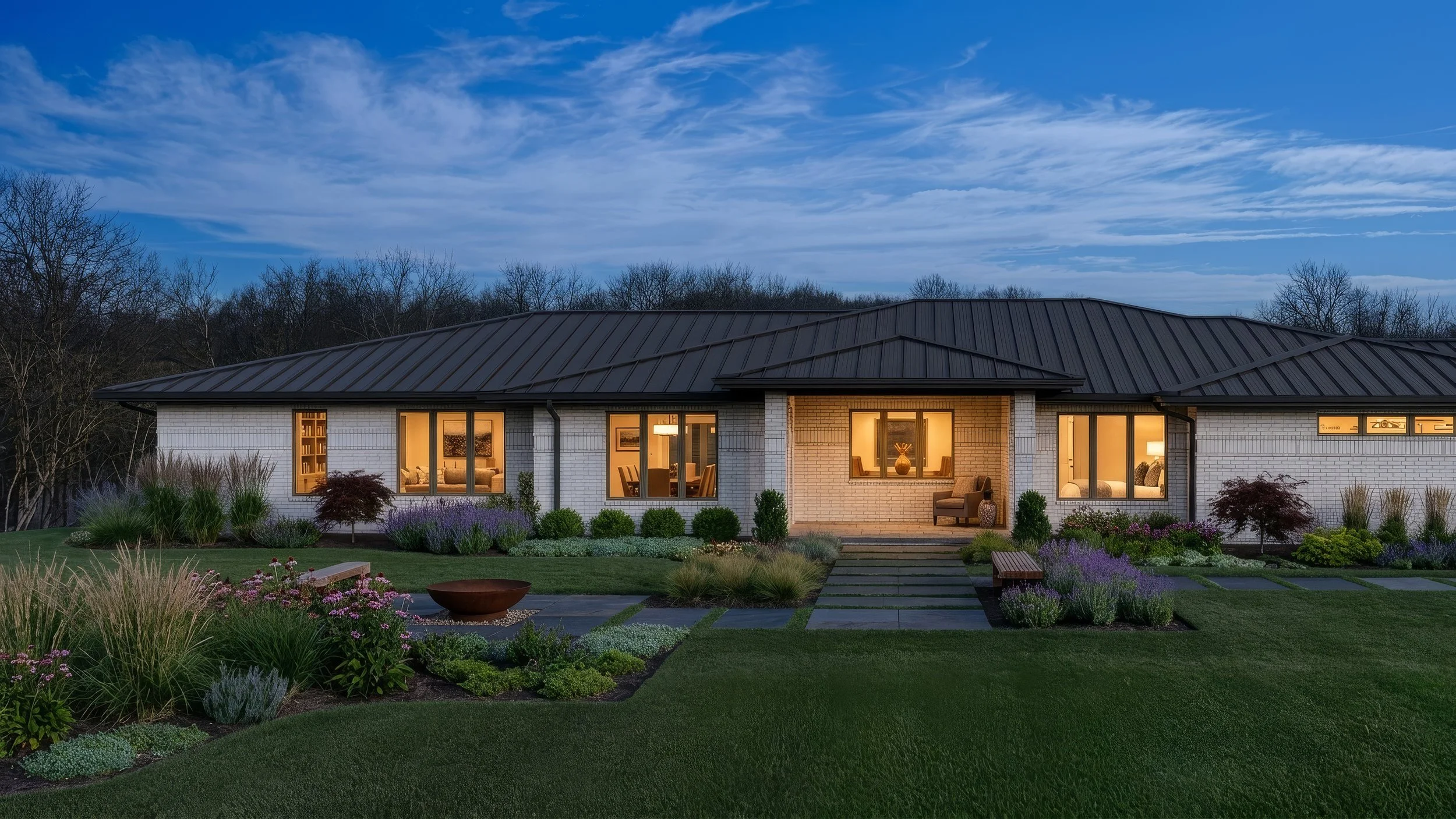
The decisions that quietly determine whether your home is comfortable, healthy, and built to last. Most are made before a single wall goes up.
Maybe it started with a Matt Risinger video at eleven at night. Maybe a friend said "Passive House" and you haven't stopped thinking about it since. Or maybe you just know the home you build next is the one you'll grow old in. And you refuse to get it wrong.
Here's what most people learn too late. Whether a home is comfortable, healthy, and built to last is decided long before anyone picks a paint color. It's decided in details you can't see, and a builder can't add later.
Here are five worth knowing before you ever sit down with an architect.
1. Comfort is decided before the first wall goes up.
The drafty corner. The room over the garage that never warms up. The west side that turns into a greenhouse by four o'clock. None of that is an equipment problem. It's a building problem. The shell of your home, and the way the walls, roof, and windows connect, decides your comfort far more than the furnace ever will. Get the shell right, and even temperatures stop being something you pay for every month. They're simply there.
2. A smaller mechanical system is a sign of a better home, not a cheaper one.
When a room runs hot or cold, people blame the heating and cooling. Often the real culprit is the building, and a bigger system just masks it. So contractors oversize, using a rule of thumb plus a safety factor. Bigger feels safer. It isn't. We model your home's real details first, then run the Manual J load calculation off that model. The number almost always comes back smaller. So the system gets quieter, gentler, and longer-lived.
3. Airtightness is the detail you can't see, and the one you'll feel every day.
An old saying claims a house needs to breathe. But a house that breathes through gaps and cracks isn't healthy. It's leaking your conditioned air out and pulling humid summer air, dust, and pollen in. The fix is to seal it tight on purpose. And unlike most promises in construction, you can test this one. A blower door measures exactly how much air leaks. That's why we design to 0.060 CFM50 per square foot and verify it, instead of hoping.
4. A high-performance home breathes on purpose.
If you seal a home that tight, doesn't it get stuffy? It's the right instinct, and the answer is the opposite of what you'd expect. A leaky home breathes through whatever it can find, unfiltered. A tight home breathes through one deliberate system: an ERV that pulls in fresh, filtered air, carries stale air out, and reclaims most of the energy in the exchange. For anyone with allergies or asthma, it's the detail they'll thank you for.
5. The most expensive mistakes happen on paper, not in the field.
Before I was an architect, I was a carpenter. Our crew was good. We chased every gap and held tight tolerances. Years later I understood what we were missing. Nobody drew how the air barrier stayed continuous where the wall met the roof. Those details weren't on paper, so they didn't exist in the field. How a home performs is decided at the drawing board, not the job site. When building science is part of the design from the first sketch, beauty and performance were never competing.
Five details. One thing in common.
Every one of them is decided early, by the person holding the pen. The shell. The system. The airtightness. The fresh air. The order the decisions are made in. None of it can be added at the end. All of it is designed.
So the choice between a beautiful home and a high-performance one was always a false one. They were never opposites. You just have to design for both, from the first line.
You've spent years building something worth protecting. The home you build next should return that care to you every day, without ever being asked.
Download this helpful guide plus the Bonus:
“Five Questions to ask any Architect, Drafter, or Builder.”
FAQ
Why does a smaller heating and cooling system mean a better home?
A smaller system usually means the home itself does more of the work. We size equipment from an energy model and a Manual J load calculation built on your actual walls, windows, and orientation, not a square-footage rule of thumb. The number almost always comes back smaller, which means quieter operation, better summer humidity control, and equipment that lasts longer.
If you seal a house that tight, won't it get stuffy or grow mold?
No. A leaky home breathes through gaps you cannot control or filter. A tight home breathes through one deliberate system, an ERV, that pulls in fresh filtered air, carries stale air out, and holds humidity in a healthy range. The result is cleaner air and less moisture risk, not more.
What is a blower door test and what airtightness number should I look for?
A blower door test puts the whole house under pressure and measures exactly how much air leaks out, so airtightness is verified instead of assumed. We design to 0.060 CFM50 per square foot of enclosure and confirm it with the test before the home is finished.
What is an ERV and why does a high-performance home need one?
An ERV, or energy recovery ventilator, is the system a tight home breathes through. It delivers a steady supply of fresh, filtered outdoor air while reclaiming most of the energy from the air it removes. For anyone with allergies or asthma, it means clean, constant air in every room.
Does a high-performance home cost more to build?
Some performance details add cost up front, but others give it back. A right-sized mechanical system is smaller and cheaper to install, and a well-built envelope uses 40 to 60 percent less energy than code year after year. The bigger savings come from avoiding the expensive fixes that surface when performance is treated as an afterthought.
Do you design high-performance homes outside Springfield, Missouri?
Yes. Burkholder Architecture is based in Springfield and is the only PHIUS-certified firm in Southwest Missouri. We design to the real conditions of your site in Climate Zone 4A, and we work with clients across the region as one partner from the first sketch through construction.
A builder or drafter who can answer all five of these without hesitating is someone worth calling back.
Download the questions and find out.
Burkholder Architecture designs performance-forward luxury homes for people who refuse to choose between beauty and performance. One trusted partner, from the first sketch through construction.
When you're ready to talk through your site, your family, and what you're building toward, we'd be glad to listen.
Godspeed and design well,
Nathan Burkholder
Principal Architect, PHIUS Certified Passive House Consultant
burkholderarchitecture.com
hello@burkholderarchitecture.com
(417) 380-9547 · Springfield, Missouri